

How Does an Apollo End Mill Sharpener Improve Cutting Tool Performance?
End mills are essential cutting tools in CNC machining, milling operations, mold manufacturing, and precision metalworking. However, repeated cutting generates heat, friction, and mechanical stress, gradually wearing down cutting edges and reducing machining performance. Replacing worn tools too frequently can increase production costs, while continuing to use dull cutters may result in poor surface finishes, dimensional errors, and unexpected downtime.
An Apollo End Mill Sharpener offers a practical approach to restoring suitable cutting edges and extending the usable life of compatible milling cutters. Understanding sharpening principles, tool geometry, grinding procedures, and equipment capabilities is essential for achieving consistent results. This guide explores how an end mill sharpener works, how to use it effectively, and what manufacturers should consider when selecting professional tool grinding equipment. It also introduces the cutting tool solutions offered by Zhejiang Taixing Intelligent Equipment Co., Ltd.
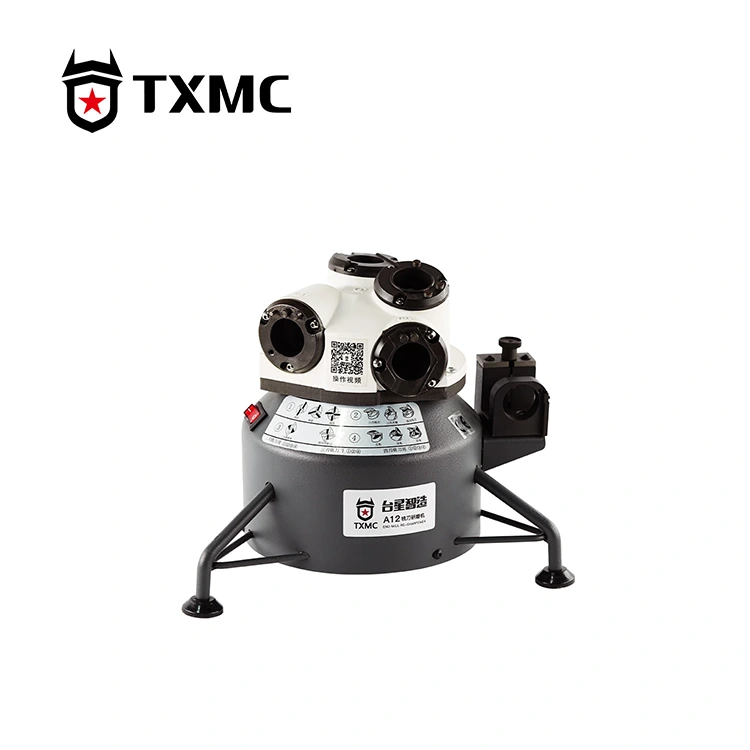
Table of Contents
- Understanding an Apollo End Mill Sharpener
- How Does an End Mill Sharpener Work?
- Why End Mill Sharpening Matters in CNC Machining
- Different Types of End Mills That Can Be Sharpened
- Important Features of an End Mill Sharpener
- How to Sharpen an End Mill Step by Step
- Common Sharpening Problems and Solutions
- How to Maintain an End Mill Sharpener
- How to Choose the Right End Mill Sharpening Machine
- End Mill Sharpener Applications Across Industries
- Frequently Asked Questions
- Conclusion and Equipment Sourcing
1. Understanding an Apollo End Mill Sharpener
An Apollo End Mill Sharpener refers to an end mill sharpening solution designed to restore the cutting performance of compatible milling tools through controlled grinding. End mill sharpeners are used in machining workshops and manufacturing facilities to maintain cutting edges, reduce tool replacement frequency, and support more economical production.
An end mill is a rotary cutting tool used to remove material from a workpiece. Unlike conventional drill bits, end mills can perform multiple machining operations, including slotting, profiling, contouring, side milling, and pocketing. Their cutting edges are located along the circumference and, depending on the design, at the end of the tool.
During machining, cutting edges gradually become dull because of abrasive wear, thermal stress, built-up material, and repeated mechanical loading. Once the cutting geometry deteriorates, the tool may require greater cutting force and generate excessive heat.
An end mill sharpener helps address this problem by grinding selected cutting surfaces and restoring appropriate edge geometry. Depending on the machine design, sharpening may focus on end cutting edges, corner radii, or other supported geometries.
Key consideration: Sharpening is not simply removing material from a worn cutter. It requires maintaining the correct cutting geometry, clearance angles, edge symmetry, and dimensional relationships. Different end mill designs may require different grinding methods and accessories.
Why Is End Mill Resharpening Important?
For machining companies that consume large quantities of cutting tools, resharpening can become an important part of cost management. Instead of immediately discarding every worn cutter, compatible tools can be inspected and restored when their remaining geometry and condition permit.
However, not every damaged end mill is suitable for sharpening. Deep cracks, severe chipping, excessive wear, and substantial dimensional loss may make replacement a safer and more economical option.
2. How Does an End Mill Sharpener Work?
An end mill sharpener uses an abrasive grinding wheel to remove a controlled amount of material from selected cutting surfaces. The workpiece is positioned and guided through a suitable fixture or grinding mechanism so that the required cutting geometry can be restored.
The Basic Grinding Process
- Tool positioning: The end mill is installed in a holder or positioning fixture that matches its diameter and geometry.
- Grinding wheel preparation: The appropriate grinding wheel is selected and checked for condition, compatibility, and correct installation.
- Angle adjustment: The grinding position is set according to the required cutting edge and clearance geometry.
- Controlled material removal: The grinding wheel removes a small amount of material from the selected cutting surface.
- Edge inspection: The sharpened tool is checked for symmetry, surface condition, and dimensional accuracy.
- Final testing: The restored tool is evaluated to determine whether it meets the requirements of the intended machining operation.
The Role of Grinding Wheel Selection
Grinding wheel selection directly influences sharpening quality. Different cutting tool materials require different abrasive characteristics.
- Diamond grinding wheels: Commonly used for grinding carbide tools because of their hardness and wear resistance.
- CBN grinding wheels: Often considered for grinding hardened high-speed steel and other suitable ferrous materials.
- Conventional abrasive wheels: May be used for appropriate tool materials and grinding operations according to the machine specification.
Wheel grit, concentration, bond type, speed, and dressing condition also influence grinding results. The correct combination should be selected according to the tool material and the manufacturer's recommendations.
Why Accurate Tool Positioning Matters
Even a suitable grinding wheel cannot produce consistent results if the end mill is incorrectly positioned. Poor alignment can create uneven cutting edges, inconsistent relief angles, and excessive material removal.
Precision fixtures and repeatable positioning mechanisms help operators maintain consistent grinding conditions across multiple tools.
3. Why End Mill Sharpening Matters in CNC Machining
Cutting tool condition directly affects machining quality, production efficiency, and operating costs. A worn end mill can cause several problems that influence the complete manufacturing process.
01. Lower Tool Replacement Costs
Suitable worn cutters can be restored instead of being discarded immediately, helping reduce overall tooling expenditure.
02. More Consistent Cutting Performance
Restoring appropriate cutting edges can help improve cutting behavior and reduce problems associated with dull tools.
03. Reduced Production Interruptions
In-house sharpening can provide an additional tool maintenance option and reduce dependence on external resharpening services.
04. Better Tool Inventory Management
Workshops can inspect and classify used cutters according to their condition and potential for reuse.
05. Improved Machining Quality
Properly restored cutting geometry helps reduce cutting resistance and supports more predictable machining results.
06. More Efficient Resource Utilization
Extending the service life of compatible tools can reduce unnecessary material consumption and tool waste.
How Dull Cutting Edges Affect Production
When an end mill becomes dull, the cutting edge may begin rubbing against the workpiece instead of removing material efficiently. This can increase heat generation, cutting forces, vibration, and surface roughness.
In precision machining, these problems may lead to dimensional deviations, burr formation, and inconsistent workpiece finishes. In severe cases, excessive cutting loads can damage the tool or workpiece.
Regular tool inspection and appropriate resharpening schedules help manufacturers identify wear before it causes serious production problems.
4. Different Types of End Mills That Can Be Sharpened
End mills are available in different geometries to meet specific machining requirements. The sharpening method depends on the tool design, cutting edge arrangement, material, and available grinding equipment.
4.1 Flat End Mills
Flat end mills have a relatively flat cutting end and are commonly used for slotting, shoulder milling, profiling, and general material removal. Sharpening operations may involve restoring the end cutting edges while maintaining the required clearance geometry.
4.2 Ball Nose End Mills
Ball nose end mills feature a rounded cutting end and are frequently used for three-dimensional contouring, mold machining, and curved surface finishing.
Their rounded cutting geometry requires careful control during grinding. Incorrect material removal can change the tool profile and affect the accuracy of the machined surface.
4.3 Corner Radius End Mills
Corner radius end mills combine a flat end geometry with a rounded transition at the cutting corners. This design improves corner strength and helps reduce chipping in suitable machining applications.
Sharpening requires maintaining the intended corner radius and cutting edge relationships.
4.4 Multi-Flute End Mills
End mills are available in two-, three-, four-, and higher-flute configurations. The number of flutes influences chip space, cutting behavior, and suitable machining conditions.
During sharpening, flute symmetry and cutting edge consistency must be considered. Equipment compatibility should be checked before processing tools with different flute counts.
| End Mill Type | Common Application | Sharpening Consideration |
|---|---|---|
| Flat End Mill | Slotting, profiling, and shoulder milling | Maintain end cutting edge and clearance geometry. |
| Ball Nose End Mill | 3D contouring and mold machining | Preserve the rounded cutting profile. |
| Corner Radius End Mill | Heavy-duty milling and corner machining | Maintain the specified corner radius. |
| Two-Flute End Mill | Slotting and general milling | Maintain cutting edge symmetry. |
| Four-Flute End Mill | Finishing and general metal cutting | Ensure consistent geometry across all flutes. |
The actual tool types and diameter ranges supported depend on the sharpener model, accessories, and grinding configuration. Always confirm compatibility before purchasing.
5. Important Features of an End Mill Sharpener
When evaluating an Apollo End Mill Sharpener or a similar tool grinding machine, buyers should focus on practical machining requirements rather than relying only on general descriptions of precision and efficiency.
Grinding Accuracy and Repeatability
Grinding accuracy determines how closely the restored tool matches its required geometry. Repeatability is equally important because multiple cutters may need to be sharpened to consistent specifications.
Accurate positioning, stable fixtures, appropriate grinding wheels, and controlled material removal all contribute to predictable results.
Tool Diameter Compatibility
Different workshops use different end mill sizes. A suitable machine should accommodate the diameter range required by the production facility.
For example, Taixing's TX-ZD20 automatic cutters grinding machine supports end mills and corner radius end mills within a specified 4–20 mm diameter range. The standard configuration also supports drill bits and ball nose end mills.
Flute Compatibility
The machine should support the flute configurations used in the workshop. Two-, three-, and four-flute end mills are common, while specialized cutters may require additional accessories or customized arrangements.
Ease of Operation
Clear adjustment procedures, reliable fixtures, and intuitive controls help reduce setup time and operator errors. For workshops processing many different cutters, simple operation can improve daily workflow.
Machine Stability
A rigid machine structure helps reduce vibration during grinding. Excessive vibration can affect surface quality, dimensional consistency, and grinding wheel performance.
Dust Collection and Workplace Cleanliness
Grinding generates fine particles that may affect equipment cleanliness and workplace conditions. A suitable dust extraction arrangement can help control grinding debris and improve workshop housekeeping.
6. How to Sharpen an End Mill Step by Step
Correct operating procedures are essential for achieving consistent sharpening results. Although different machines use different fixtures and adjustment mechanisms, the following general workflow provides a useful reference for tool maintenance personnel.
Step 1: Inspect the Used End Mill
Before sharpening, inspect the cutter for visible damage, excessive wear, cracks, and chipped cutting edges. Determine whether the tool has sufficient remaining material for restoration.
Tools with serious structural damage should not be sharpened without a qualified technical assessment.
Step 2: Clean the Cutting Tool
Remove chips, oil, and accumulated cutting residue from the tool. A clean surface makes inspection easier and helps ensure accurate positioning during grinding.
Step 3: Select the Appropriate Fixture
Choose a holder or grinding fixture compatible with the tool diameter and geometry. Ensure that the cutter is properly secured and correctly aligned.
Step 4: Confirm the Grinding Wheel
Select the grinding wheel according to the cutting tool material and machine instructions. Check the wheel for visible damage, correct mounting, and suitable operating conditions.
Step 5: Set the Required Grinding Geometry
Adjust the grinding position according to the required cutting edge and clearance geometry. The appropriate angles depend on the cutter design, material, and intended machining application.
Step 6: Perform Controlled Grinding
Start the machine according to its operating instructions. Apply controlled grinding movements and avoid excessive material removal or unnecessary pressure.
Where required, use suitable coolant or follow the manufacturer's recommended grinding method to manage heat generation.
Step 7: Inspect the Sharpened Edges
Check the cutting edges for symmetry, chips, grinding marks, and dimensional consistency. Use appropriate measuring instruments when the application requires tighter tolerances.
Step 8: Conduct a Trial Machining Test
Where practical, evaluate the restored tool under controlled cutting conditions. Monitor cutting noise, vibration, surface finish, and dimensional results before returning the cutter to regular production.
Important: Sharpening procedures and allowable grinding parameters vary by machine and cutter design. Always follow the equipment manufacturer's instructions, wear appropriate protective equipment, and use properly guarded grinding equipment.
7. Common Sharpening Problems and Solutions
Incorrect grinding procedures can reduce tool performance instead of improving it. Understanding common problems helps operators maintain more consistent sharpening quality.
| Common Problem | Possible Cause | Recommended Solution |
|---|---|---|
| Uneven Cutting Edges | Incorrect positioning or inconsistent grinding movement. | Check fixture alignment and repeat the setup procedure. |
| Excessive Heat | Incorrect wheel selection, excessive grinding pressure, or unsuitable speed. | Review grinding parameters and follow the recommended cooling procedure. |
| Poor Surface Finish | Worn grinding wheel, vibration, or unsuitable abrasive grit. | Inspect the wheel, improve machine stability, and select suitable abrasives. |
| Incorrect Clearance Angle | Improper adjustment or inaccurate tool positioning. | Verify the required geometry and fixture settings. |
| Excessive Material Removal | Uncontrolled grinding or incorrect operator technique. | Use controlled grinding passes and inspect the tool between operations. |
| Rapid Grinding Wheel Wear | Inappropriate wheel specification or operating conditions. | Confirm abrasive compatibility and dressing requirements. |
| Inconsistent Results Between Tools | Variable setup, poor fixture repeatability, or inconsistent inspection. | Standardize the setup and inspection procedure. |
How Can Tool Quality Be Verified?
Visual inspection alone may not be sufficient for precision cutting applications. Depending on the required accuracy, workshops can use optical measuring equipment, tool presetters, microscopes, and suitable dimensional inspection instruments.
Important inspection items include cutting edge condition, flute symmetry, diameter, corner geometry, and clearance angles. The required inspection level should reflect the machining tolerance and tool application.
8. How to Maintain an End Mill Sharpener
Regular machine maintenance helps preserve grinding accuracy, equipment reliability, and operator safety. A sharpening machine should be maintained according to its operating environment and manufacturer's recommendations.
Daily Maintenance
- Remove grinding dust and debris from the machine after operation.
- Check the grinding wheel for visible damage or abnormal wear.
- Inspect fixtures and tool holders for dirt or damage.
- Check moving components for unusual noise or vibration.
- Keep electrical connections and control areas clean and dry.
Periodic Maintenance
- Inspect spindle condition and bearing performance.
- Check the alignment and stability of positioning components.
- Verify the condition of guide rails and adjustment mechanisms.
- Inspect dust extraction components and clean filters where applicable.
- Check electrical systems and safety devices.
- Verify grinding accuracy through suitable inspection procedures.
Grinding Wheel Management
The grinding wheel is one of the most important consumable components of a sharpening machine. A worn or improperly dressed wheel can negatively affect grinding performance.
Operators should follow the wheel manufacturer's requirements for inspection, dressing, balancing, storage, and replacement. Damaged wheels should never be used.
9. How to Choose the Right End Mill Sharpening Machine
Selecting a suitable end mill sharpener requires evaluating the workshop's tool inventory, production volume, sharpening requirements, and available operating resources.
9.1 Identify Your Tool Diameter Range
Start by identifying the smallest and largest end mill diameters used in daily production. Select a machine that supports the required range without relying on unsuitable workarounds.
9.2 Confirm the Supported Tool Geometries
Check whether the machine can handle flat end mills, corner radius end mills, ball nose end mills, and other specialized cutters used by the business.
9.3 Evaluate Material Compatibility
Common cutting tool materials include high-speed steel (HSS), solid carbide, and other specialized materials. Grinding wheel selection and machine capability should be confirmed for each material.
9.4 Consider Production Volume
Small workshops may prioritize compact equipment and simple manual operation. Larger production facilities may benefit from automated grinding systems that reduce repetitive setup and improve processing consistency.
9.5 Review Automation and Operator Requirements
Automation can reduce repetitive manual adjustments and simplify the grinding workflow. However, buyers should evaluate programming requirements, tooling setup, operator training, and maintenance needs before selecting an automatic machine.
9.6 Compare the Total Cost of Ownership
The initial machine price is only one part of the investment. Grinding wheels, fixtures, spare parts, maintenance, operator time, and production capacity also affect long-term operating costs.
| Buying Factor | Questions to Ask | Expected Benefit |
|---|---|---|
| Diameter Range | Does the machine support the required cutter sizes? | Better equipment compatibility. |
| Tool Types | Can it sharpen the end mill geometries used in production? | Greater application flexibility. |
| Grinding Accuracy | What precision can be achieved and verified? | More consistent cutting tool quality. |
| Automation | How much operator intervention is required? | Improved workflow efficiency. |
| Maintenance | Are spare parts and technical support available? | More manageable long-term operation. |
| Supplier Experience | Does the supplier understand cutting tool applications? | Better technical guidance and equipment selection. |
Taixing End Mill Sharpening Solutions
Zhejiang Taixing Intelligent Equipment Co., Ltd. specializes in the research, development, manufacturing, and supply of tool grinding machines, specialized cutting tool grinders, and precision machine tools.
With more than 20 years of industry experience, the company has developed a range of cutting tool equipment for different sharpening and manufacturing requirements. Its product portfolio includes milling cutter grinders, drill bit sharpeners, screw tap grinders, CNC tool grinders, and automatic cutting tool grinding machines.
For customers looking for end mill sharpening equipment, two relevant solutions include:
TX-X3 End Mill Grinder
The TX-X3 is a portable end mill grinding solution designed for compatible cutters in the 4–14 mm diameter range. Its standard configuration supports two-, three-, and four-flute end mills, with customized options available for five- and six-flute cutters.
It is designed for users who need a compact solution for maintaining compatible end mill cutting edges.
TX-ZD20 Automatic Cutters Grinding Machine
The TX-ZD20 supports multiple tool types, including end mills, corner radius end mills, drill bits, and ball nose end mills. Its standard configuration supports end mill and corner radius end mill diameters from 4–20 mm, with two-, three-, and four-flute options.
The machine also supports compatible tungsten steel, carbide, and HSS tools. Optional accessories are available for additional tool configurations. Its PLC control system and built-in dust extraction system are designed to support a more organized grinding workflow.
Choosing between equipment types: A compact end mill grinder may suit workshops with straightforward sharpening needs, while an automatic cutters grinding machine can be more appropriate for facilities processing several supported tool types. Final selection should be based on actual tool dimensions, geometry, production volume, and required grinding operations.
Through its professional R&D team and tool grinding experience, Zhejiang Taixing Intelligent Equipment Co., Ltd. provides equipment selection and customized tool grinding solutions for different manufacturing applications.
10. End Mill Sharpener Applications Across Industries
End mill sharpening equipment supports a wide range of industries that depend on reliable milling tools and consistent machining performance.
10.1 Automotive Manufacturing
Automotive component production involves machining metal parts, housings, molds, and precision structural components. Maintaining suitable cutting tools helps support consistent machining operations and production efficiency.
10.2 Mold and Die Manufacturing
Mold manufacturing requires accurate contouring, cavity machining, and surface finishing. Ball nose and corner radius end mills are frequently used in these applications. Proper tool geometry is important for achieving the required surface quality and dimensional accuracy.
10.3 Aerospace Component Machining
Aerospace machining involves demanding materials and strict dimensional requirements. Tool condition, grinding accuracy, and inspection procedures are especially important when maintaining cutting tools used for precision components.
10.4 General Metalworking Workshops
Small and medium-sized machining workshops often use multiple end mill types and sizes. In-house sharpening equipment can provide greater flexibility when maintaining compatible tools and managing replacement costs.
10.5 Cutting Tool Manufacturing
Tool manufacturers require specialized grinding equipment for producing and maintaining different cutter geometries. Depending on the production process, dedicated grinders and CNC tool grinding systems may be required to achieve more complex geometries.
11. Frequently Asked Questions
Q1. What is an Apollo End Mill Sharpener used for?
An end mill sharpener is used to restore selected cutting edges on compatible worn milling cutters. It helps maintain tool usability, reduce replacement costs, and support more consistent machining performance.
Q2. Can all end mills be sharpened?
No. Sharpening suitability depends on the tool's material, geometry, remaining dimensions, and physical condition. Severely cracked, chipped, or excessively worn cutters may need to be replaced.
Q3. Which materials can an end mill sharpener process?
Depending on the machine and grinding wheel configuration, compatible tools may include high-speed steel and carbide end mills. Always verify the machine's material compatibility and recommended grinding accessories.
Q4. How often should end mills be sharpened?
There is no universal sharpening interval. It depends on workpiece material, cutting speed, feed rate, coolant conditions, machining duration, and tool wear. Regular inspection is more reliable than using a fixed schedule for every application.
Q5. What is the difference between an end mill sharpener and a CNC tool grinder?
A dedicated end mill sharpener generally handles specific tool types and supported grinding operations. A CNC tool grinder offers greater flexibility for producing or regrinding more complex cutting geometries, depending on its axes, software, and accessories.
Q6. Can a machine sharpen ball nose end mills?
Some machines support ball nose end mills, but this depends on the model and grinding configuration. Buyers should confirm the supported diameter range and ball-end geometry before purchasing.
Q7. Why does an end mill become dull quickly?
Common reasons include unsuitable cutting parameters, abrasive workpiece materials, excessive cutting temperatures, inadequate chip evacuation, and incorrect tool selection. Reviewing machining conditions can help reduce premature wear.
Q8. Does sharpening reduce the diameter of an end mill?
Grinding removes material, and certain sharpening operations may affect the tool's dimensions. The amount of dimensional change depends on the grinding surfaces and procedure. Diameter-critical applications require appropriate measurement and inspection.
Q9. What should be checked before buying an end mill sharpener?
Important factors include tool diameter range, supported flute numbers, compatible materials, grinding accuracy, available fixtures, automation level, maintenance requirements, and technical support.
Q10. Does Zhejiang Taixing Intelligent Equipment Co., Ltd. provide end mill sharpening machines?
Yes. Taixing offers end mill grinding solutions, including the TX-X3 End Mill Grinder and the TX-ZD20 Automatic Cutters Grinding Machine. Different models support different tool diameters, geometries, and operating requirements.
Q11. Is automatic end mill sharpening suitable for small workshops?
It can be suitable when the workshop processes compatible cutters regularly and the expected productivity benefits justify the investment. Buyers should compare machine capacity, setup time, operator requirements, and maintenance costs.
Q12. How can I obtain a quotation for an end mill sharpener?
Provide the required tool diameter range, flute count, cutter types, material, expected processing volume, and preferred automation level. Sharing tool samples or technical drawings can help the manufacturer recommend suitable equipment.
12. Conclusion: Improve Tool Performance with the Right Sharpening Equipment
An Apollo End Mill Sharpener represents an important category of cutting tool maintenance equipment for machining businesses seeking to improve tool utilization and control production costs. By restoring suitable cutting edges, sharpening equipment can help extend the usable life of compatible milling cutters and reduce unnecessary tool replacement.
However, achieving reliable results requires more than simply grinding a worn edge. Tool geometry, grinding wheel selection, positioning accuracy, material compatibility, and inspection procedures all influence the final result.
For workshops with different tool types and production requirements, choosing equipment with the appropriate diameter range, grinding functions, and automation level is essential.
Zhejiang Taixing Intelligent Equipment Co., Ltd. provides a range of cutting tool grinding solutions, including end mill grinders and automatic cutters grinding machines. With professional equipment development experience and technical support, the company helps customers identify suitable solutions for their tool maintenance and manufacturing needs.
Looking for a Reliable End Mill Sharpener Manufacturer?
Zhejiang Taixing Intelligent Equipment Co., Ltd. provides professional cutting tool grinding equipment for machining workshops, tool manufacturers, and industrial production facilities.
Whether you need a compact end mill grinder, an automatic cutters grinding machine, or a customized tool sharpening solution, our team can help you evaluate your application requirements.
Contact us today to discuss your tool specifications, request product details, and find the right grinding equipment for your business.
Contact UsPrevious:No News